TRACK TOPIC:
Complexity, Fragmentation, and Emergent World Orders
|
|
CHAIRS
|
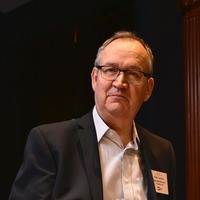
Maurice Yolles
Professor Emeritus of Management Systems
Liverpool John Moores University, UK
 |
Mike C. Jackson
Emeritus Professor of Management Systems former
Dean of Hull University Business School, UK
|
|
The
long-standing
assumption of a
single
interconnected
world system
that is
economically
integrated,
institutionally
governed, and
normatively
coherent is now
under
accelerating
systemic stress.
Trade conflict,
technological
decoupling,
institutional
paralysis, and
the renewed
assertion of
civilisational
blocs are
dismantling the
architecture of
the post 1945
global order
with a speed
that
conventional
analysis has
struggled to
anticipate or
explain. What
appears on the
surface as
geopolitical
turbulence
expresses a
deeper loss of
coherence in the
global system’s
capacity to
sustain shared
meaning,
coordinated
action, and
legitimate
authority.
From a social
systems
perspective,
deglobalization
cannot be
understood as a
simple reversal
of policy or a
shift in
geopolitical
power. It is a
transformation
in the
generative
schemata through
which societies
organise
themselves,
create meaning,
and maintain
viable relations
across borders.
The
fragmentation of
world order is
therefore not
merely an
economic or
political event.
It is a
civilisational
transition that
disrupts the
normative
foundations,
institutional
logics, and
identity
structures that
enable social
organisation to
reproduce itself.
As
coherence
declines, the
global system
moves toward a
multi centred
configuration in
which no single
normative or
institutional
framework
provides a
stable attractor
for collective
action.
This track
invites
contributions
from social
cybernetics,
social systems
theory,
sociology,
organisational
science,
institutional
theory, and
related fields
that address the
social
dimensions of
deglobalization.
It seeks
analyses that
examine how
shared normative
frameworks and
social
institutions
adapt or fail to
adapt under
conditions of
civilisational
fragmentation,
what social
mechanisms
generate or
inhibit the
emergence of new
world orders
from the
collapse of
existing ones,
how
organisations,
communities, and
governance
systems maintain
coherence and
legitimacy when
the larger
systems
embedding them
are in
transition, and
what conditions
enable
constructive
social
reconstruction
rather than
cascading
fragmentation.
The aim of the
track is to
foster
interdisciplinary
dialogue among
scholars
committed to
understanding
deglobalization
as a social and
systemic
challenge rather
than an economic
or geopolitical
one. It seeks to
advance
conceptual tools
capable of
explaining how
global coherence
is lost, how new
forms of order
arise, and how
social systems
navigate
transitions in
which their own
viability
conditions are
being rewritten. .
Topics include (but
are not limited
to):
- Systemic Theories
- Social Systems;
- Social Cybernetics
- Soft Systems Methodology
- Systemic thinking and knowledge society
|