TRACK TOPIC:
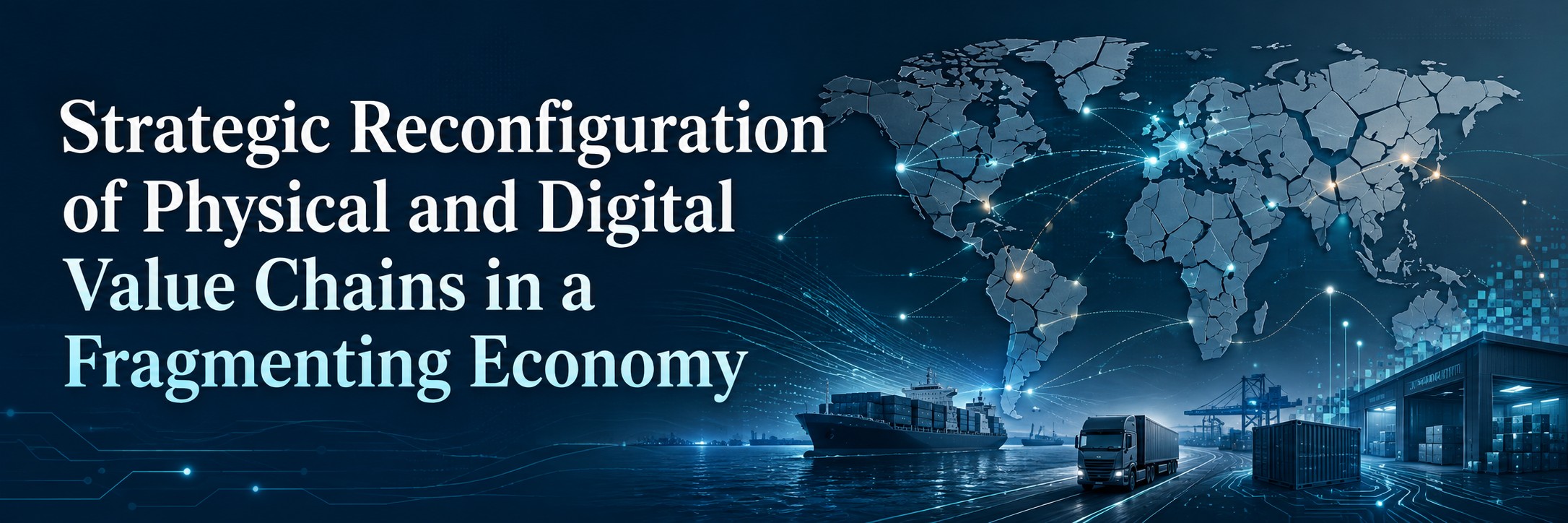
Strategic Reconfiguration of Physical and Digital Value Chains in a Fragmenting Economy
|
|
CHAIRS
|

Roberto Vona
University of Naples "Federico II", Italy |

Nadia Di Paola
University of Naples "Federico II", Italy |
|

Silvia Cosimato
University of Naples "Federico II", Italy |
|
|
The accelerating
fragmentation of
the global
economy has
intensified
scholarly and
managerial
interest in the
strategic
reconfiguration
of value chains.
The frequency
and extent of
disruptions
force companies
to continuous
strategic review
processes, which
sometimes take
the form of
decisions to
relocate
operational
activities or to
return
previously
outsourced
activities.
Studies on the
subject
conceptualize
reshoring,
nearshoring, and
friendshoring
decisions,
deepening them
in terms of
antecedents,
contingencies,
results, and
implementation
challenges.
Theoretical
perspectives
based on
resources, or
dynamic
capabilities,
have been put
forward to
discuss how
firms identify
vulnerable
assets, redesign
procurement
decisions,
internalize or
outsource
critical
activities,
under conditions
of uncertainty.
As a matter of
fact, firms are
no longer asked
merely to
optimize cost
and efficiency;
they are
increasingly
compelled to
redesign where
value is
produced, under
which mechanisms
they can sustain
their resilience.
In this
scenario,
digital
transformation
is reshaping the
architecture of
supply networks,
with evidence
that digital
capabilities can
strengthen
resilience and
adaptive
decision-making
and that
physical and
digital value
chains are
becoming
increasingly
interconnected.
Production
plants rely on
data flows,
cloud
infrastructures,
cybersecurity
practices,
AI-driven
analytics to
function, as
well as digital
infrastructures
depend on
physical assets,
such as data
centers, token
factories,
energy systems,
and logistics
networks.
Moreover,
emerging trends
concerning the
growing demand
for sovereign
cloud, data
governance,
artificial
intelligence
infrastructures,
and
interoperability
open up to
emerging
conceptualizations
embracing
digital and
physical aspects
(i.e. digital
reshoring).
This track seeks
conceptual,
empirical, and
methodological
contributions
that investigate
how
organizations
adapt physical
and digital
value chains in
response to
fragmentation
and uncertainty.
We invite
innovative
contributions
that challenge
established
assumptions and
propose new
conceptual
frameworks,
empirical
insights, and
policy
implications.
Potential topics
include, but are
not limited to:
-
Reshoring,
nearshoring, and
friend-shoring
decisions
-
Visibility and
digital
sovereignty in
fragmented
economies
-
Resilience,
redundancy,
modularity, and
adaptability in
hybrid networks
-
AI, digital
twins,
blockchain, IoT
orchestration
-
Governance
models for
hybrid
physical-digital
value chains
-
Sustainability,
circularity, and
decarbonization
effects of
reconfigurations
-
Sectoral and
regional
responses to
geopolitical
fragmentation
-
Managerial
cognition, and
strategic
decision-making
|