|


10th Business Systems Laboratory International SymposiumMASTERING CHALLENGES:Navigating the Waves of Innovation in a Tech-Driven World |
|||||
 |
|||||
January 22-23,
2026
|
|
||
|
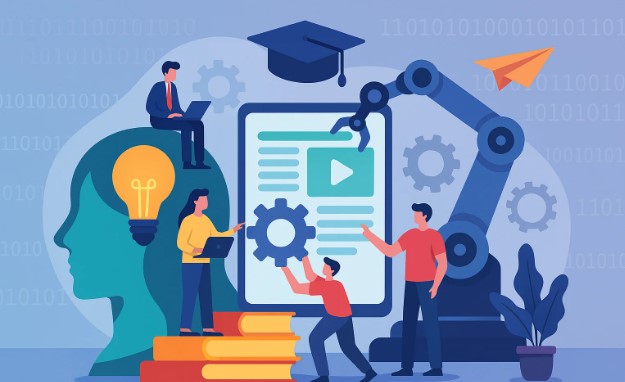
Track description This track addresses real-world challenges emerging at the intersection of work, corporate education, and technology in an increasingly complex global context. It aims to explore how artificial intelligence, active learning methodologies, and complex thinking can reshape learning processes inside organizations. Researchers and professionals are invited to share theoretical frameworks, case studies, and transformative practices that connect educational innovation, emerging competencies, and organizational change—thus contributing to a deeper understanding of today’s systemic challenges. This track also seeks to highlight best practices for cultivating an ongoing learning culture in both academic and corporate contexts. Presenters are encouraged to share effective models for assessment, credentialing, and mentoring that help learners continually update their competencies as new tools and processes emerge. Equally important are examples of partnerships and cross-sector collaborations, whether between universities and businesses or among government agencies and community organizations, that facilitate agile program design, inclusivity, and equitable access to future-ready skills. There is a pressing need to address the ethical and human aspects of technological change. We aim to foster a holistic understanding of how learning and work intersect in building a more sustainable, inclusive future. We welcome diverse presentation proposals that address innovative strategies for teaching and training, reflecting the broad scope of competencies needed in the digital age. Some research lines can include but are not limited to: - Training in systemic thinking and responsible decision-making - Artificial Intelligence and Emerging Technologies in Learning - Applications of generative AI in professional contexts - Immersive learning through augmented reality and simulation - Competencies for the Future of Work - Development of soft, creative, and digital skills - Reskilling and upskilling strategies in disruptive environments - Learning Innovation and Institutional Transformation - Ethical dilemmas in the use of AI in corporate education - Access gaps, digital privacy, and algorithmic justice: ensuring AI systems are fair, transparent, and do not reinforce bias or inequality. Together, let’s redefine how we learn, teach, and collaborate for the challenges and opportunities of a tech-driven era.
|
||
|
|

