|


10th Business Systems Laboratory International SymposiumMASTERING CHALLENGES:Navigating the Waves of Innovation in a Tech-Driven World |
|||||
 |
|||||
January 22-23,
2026
|
|
||
|
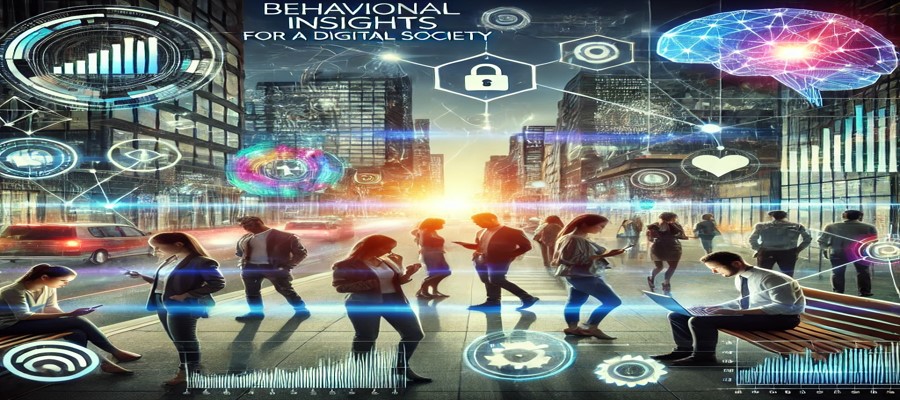
Track description As digital technologies reshape every facet of human life, understanding behavior demands an integrated approach that considers cognitive, affective, and spiritual dimensions. This track aims to explore how thought, emotion, and meaning-making are influenced by, and in turn shape, our interactions with digital environments. In particular, the track welcome submissions investigating: Cognitive Dimensions focus on how technology transforms decision-making, attention, reasoning, and digital literacy. From algorithmic thinking to cognitive biases, we examine how minds adapt and respond to tech-saturated realities. Affective Dimensions address how digital platforms modulate emotions, amplify feelings, and foster collective mood. We explore emotional contagion, empathy, and design’s role in triggering emotional responses. Topics include affective computing, emotional regulation, and the impact of technology on well-being. Spiritual Dimensions consider how identity, purpose, and values evolve in digital contexts. We investigate technology's role in meaning-making, mindfulness, existential exploration, and digital transcendence. Reflective Intersections explore the interplay among these dimensions. We examine how emotions influence cognition, how spiritual beliefs shape perception, and how values drive emotional engagement. These topics include affective forecasting, digital ethics, intuition, and awe in virtual spaces. The applied Perspectives include the following: • Systems Approaches: Modelling human-tech interactions through complexity theory and network analysis. • Design Ethics: fostering human-centred, inclusive, and sustainable technologies that support autonomy and flourishing. • Practical Applications: Promoting digital well-being, informed policy, education for mindful tech use, and cross-cultural insights. By bridging psychology, systems thinking, neuroscience, philosophy, anthropology, computer science, and design, this interdisciplinary framework seeks to understand the evolving relationship between humans and technology. By integrating cognitive clarity, emotional intelligence, and spiritual insight, we aim to inform the creation of digital environments that nurture human potential in an increasingly complex technology-driven world.
|
||
|
|

